Treatments
- Home / Dr. Vaibhav Vira
- Neuro Rehabilitation
- Amyotrophic Lateral Sclerosis (ALS)
- Cervical spondylotic myelopathy
- Stroke rehabilitation
- Speech, language & swallowing disorders
- Spinal cord injury (traumatic & non-traumatic)
- Parkinson’s disease rehabilitation
- Encephalopathies
- Traumatic brain injury
- Multiple sclerosis
- Neurogenic bladder & bowel
- Spasticity management
Spinal cord injury (traumatic & non-traumatic)
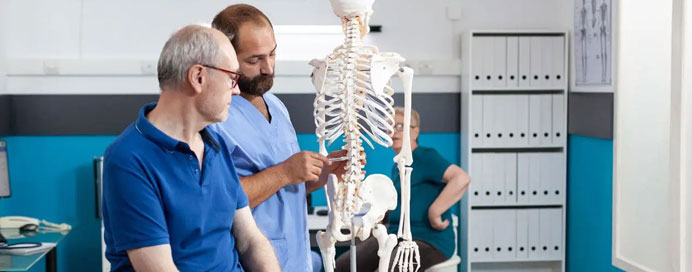
Spinal cord injury (SCI) is a serious condition that occurs when there is damage to the spinal cord, leading to loss of movement, sensation, or both below the level of injury. It can be classified as traumatic (caused by accidents, falls, or injuries) or non-traumatic (caused by infections, tumors, degenerative diseases, or medical conditions). The severity of the injury varies, and early medical care along with proper rehabilitation plays a vital role in improving function and quality of life.
Types of Spinal Cord Injury
Spinal cord injuries are broadly divided into traumatic and non-traumatic types based on their cause. Understanding the type helps in planning the right treatment and rehabilitation approach.
- Traumatic SCI occurs due to road accidents, falls, or sports injuries
- Non-traumatic SCI results from tumors, infections, or degenerative conditions
- Injuries can be complete (total loss of function) or incomplete (partial loss)
- Severity depends on the location and extent of damage
Symptoms and Complications
The symptoms of spinal cord injury depend on the level and severity of damage. It may affect movement, sensation, and various body functions.
- Loss of movement or paralysis (paraplegia or quadriplegia)
- Loss of sensation such as touch, pain, or temperature
- Difficulty in breathing (in higher-level injuries)
- Bladder and bowel control issues
- Muscle stiffness, spasms, or pain
Rehabilitation and Management
Rehabilitation is a key part of recovery after a spinal cord injury. It focuses on improving independence, mobility, and overall well-being.
- Physical therapy to improve strength and mobility
- Occupational therapy for daily living activities
- Use of assistive devices like wheelchairs or braces
- Pain management and prevention of complications
- Psychological support for emotional well-being
- Long-term care and lifestyle adjustments for better quality of life

