Treatments
- Home / Dr. Vaibhav Vira
Scoliosis
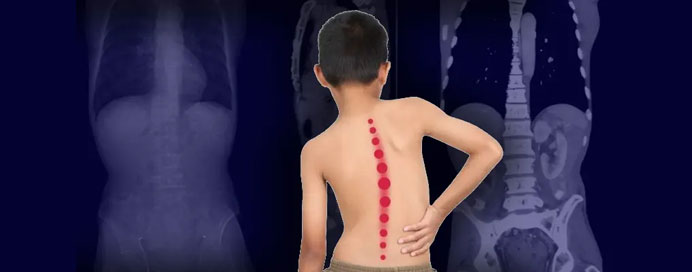
Scoliosis is a musculoskeletal condition characterized by an abnormal lateral curvature of the spine, often accompanied by vertebral rotation. It commonly develops during adolescence (idiopathic scoliosis), but can also be congenital or neuromuscular in origin. The condition may present as uneven shoulders, a prominent rib hump, or asymmetry in the waist and hips. While mild cases may remain asymptomatic, more severe curves can lead to pain, postural imbalance, and in extreme cases, respiratory compromise. Early detection through screening and regular monitoring is important to prevent progression and guide appropriate management.
Management and Rehabilitation
Management of scoliosis depends on the severity of the curve, age, and risk of progression. Mild cases are usually managed with observation and regular follow-up, while moderate curves may require bracing to prevent further progression, especially in growing children. Physiotherapy plays a key role in improving posture, strengthening spinal muscles, and enhancing flexibility through specific exercises such as scoliosis-specific exercise programs. In severe cases, surgical intervention like spinal fusion may be necessary to correct the deformity and stabilize the spine. A multidisciplinary approach, including orthopedic care and rehabilitation, helps in achieving better functional outcomes and quality of life.

