Treatments
- Home / Dr. Vaibhav Vira
- Amputation Rehabilitation
- Phantom limb pain
- Prosthetic management & training
Prosthetic management & training
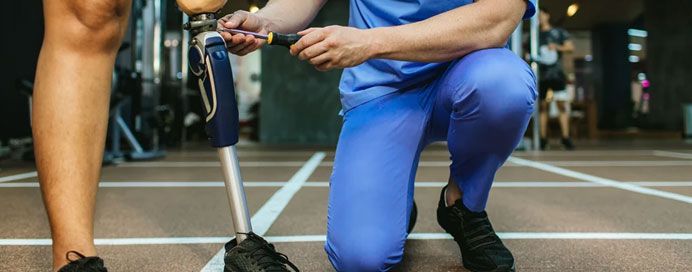
Prosthetic management and training are essential components of amputation rehabilitation, aimed at restoring mobility, independence, and functional ability. After amputation, patients must adapt physically and psychologically to using an artificial limb. Proper prosthetic fitting, gradual training, and continuous follow-up are crucial to ensure comfort, efficiency, and long-term success. Rehabilitation focuses not only on using the prosthesis but also on strengthening the residual limb, improving balance, and promoting confidence in daily activities.
Prosthetic Training and Functional Rehabilitation
Prosthetic training involves a structured program that helps individuals learn how to safely and effectively use their prosthesis in everyday life. It requires coordination between the patient and rehabilitation team.
- Prosthetic fitting: Ensuring correct size, alignment, and comfort of the prosthesis
- Donning and doffing: Training in putting on and removing the prosthesis properly
- Gait training: Learning to walk with balance, coordination, and proper weight distribution
- Strength and endurance exercises: Improving muscle power and stamina for better control
- Balance and coordination: Activities to prevent falls and enhance stability
- Skin care: Monitoring the residual limb to prevent irritation, sores, or infection
- Functional training: Practicing daily activities like standing, walking, climbing stairs, and sitting safely

