Treatments
- Home / Dr. Vaibhav Vira
- Musculoskeletal & Pain Disorders
- Neck & Back Pain
- Joint Pain (Shoulder, Knee, Hip, etc.)
- TMJ pain
- Central post-stroke pain
- Complex Regional Pain Syndrome (CRPS)
- Dystonia pain (cervical, torticollis, hand dystonia, hemifacial spasm)
- Degenerative joint disease & arthritis
- Degenerative disc disease of spine
- Neuropathic pain
- Vasculitis pain
- Visceral pain
- Sports concussion
- Fibromyalgia
- Myofascial pain
- Peripheral neuropathy (Trigeminal neuralgia, compression neuropathies)
- Headaches & migraine
- Chronic pelvic pain
Degenerative disc disease of spine
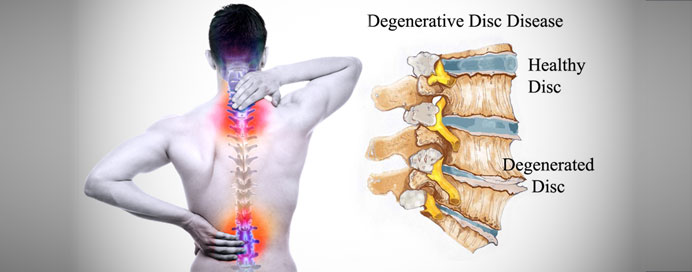
Degenerative disc disease (DDD) of the spine is a condition in which the intervertebral discs—the soft, cushion-like structures between the vertebrae—gradually lose their hydration, elasticity, and ability to absorb shock over time. Although it is commonly associated with aging, it can also occur earlier due to injury, repetitive strain, poor posture, or genetic predisposition. As the discs degenerate, they may shrink, bulge, or develop small tears, leading to reduced space between vertebrae and increased pressure on surrounding nerves. This can result in chronic neck or lower back pain, stiffness, and sometimes radiating pain into the arms or legs (such as sciatica). The pain may worsen with activities like bending, lifting, or prolonged sitting, and in some cases, it can significantly affect mobility and daily functioning.
Symptoms & Long-Term Management of Degenerative Disc Disease
Degenerative disc disease often presents with a combination of mechanical and nerve-related symptoms that can vary in intensity from mild discomfort to severe, disabling pain. Individuals may experience persistent back or neck pain that comes and goes, stiffness especially after rest, and increased pain during movement or prolonged positions. When nerve compression occurs, symptoms such as tingling, numbness, weakness, or radiating pain into the limbs may develop. Long-term management focuses on reducing pain, improving spinal stability, and maintaining mobility. This includes lifestyle modifications like maintaining proper posture, regular low-impact exercises, and weight control, along with medical treatments such as pain-relieving medications, physical therapy, and sometimes epidural injections. In severe cases where conservative treatments fail, surgical interventions like discectomy or spinal fusion may be considered to relieve nerve pressure and stabilize the spine.

