Treatments
- Home / Dr. Vaibhav Vira
Spina bifida
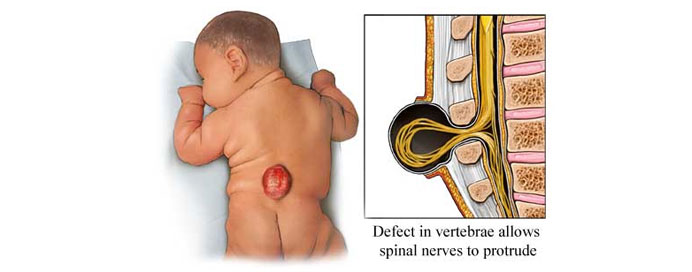
Spina bifida is a congenital neural tube defect in which the spinal cord and its protective coverings do not develop properly, leading to incomplete closure of the backbone during early fetal development. It can range in severity from spina bifida occulta (mild and often asymptomatic) to more serious forms like meningocele and myelomeningocele, where the spinal cord and nerves may protrude outside the body. Children with spina bifida may experience muscle weakness or paralysis in the lower limbs, sensory loss, bladder and bowel dysfunction, and associated conditions such as hydrocephalus. Early medical care and long-term rehabilitation are essential to manage complications and improve functional independence.
Management and Rehabilitation
Management of spina bifida requires a comprehensive, lifelong approach focusing on mobility, prevention of complications, and maximizing independence. Early surgical closure may be performed in severe cases to protect the spinal cord and prevent infection. Physiotherapy is essential to improve strength, maintain joint mobility, and train in functional activities such as sitting, standing, and walking with assistive devices if needed. Orthotic support like braces can help in maintaining proper alignment and mobility. Bladder and bowel management programs are crucial for maintaining hygiene and preventing infections. Additionally, family education and multidisciplinary care involving pediatricians, physiotherapists, and occupational therapists play a key role in enhancing the child’s quality of life.

